

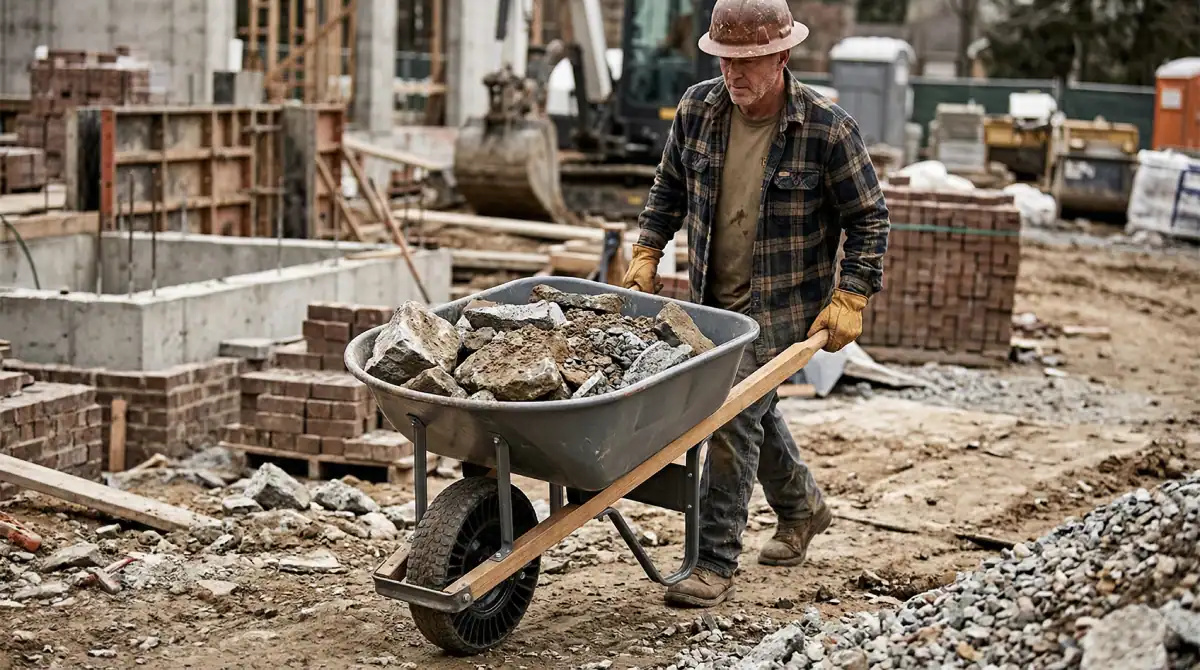
When you are tackling professional landscaping, masonry, or construction projects, a standard backyard garden cart simply won’t cut it. Hauling concrete, jagged rocks, wet dirt, and heavy debris requires a tool built for abuse. Enter the commercial wheelbarrow.
Investing in a commercial wheelbarrow is one of the smartest decisions a contractor or serious DIYer can make. It saves time, reduces physical strain, and prevents the frustrating mid-project breakdowns that happen when cheap equipment fails. In this guide, we will break down exactly what makes a wheelbarrow commercial-grade, the features you need to look for, popular options on the market, and how to maintain your investment.
What Sets a Commercial Wheelbarrow Apart?
At first glance, all wheelbarrows look relatively similar. However, the difference between a residential and a commercial wheelbarrow comes down to engineering and material quality.
A standard residential wheelbarrow is designed to move mulch, light soil, and yard clippings a few times a month. If you load it to the brim with wet concrete, the tub will likely buckle, the handles may splinter, or the tire will pop.
A commercial wheelbarrow is engineered for daily, high-impact use. They feature reinforced undercarriages, thicker tray materials, heavy-duty bearings, and cross-bracing. They are built to handle payload capacities ranging from 300 to over 600 pounds without flexing. When time is money on a job site, a commercial-grade barrow ensures you can move maximum material with minimal risk of equipment failure.
Key Features to Consider Before Buying
Finding the right commercial wheelbarrow depends entirely on the type of materials you haul and the terrain of your job sites. Here are the crucial components you need to evaluate:
1. Tray Material: Steel vs. Poly
- Steel Trays: The traditional choice for construction. Thick, heavy-gauge steel is ideal for hauling abrasive materials like jagged rocks, gravel, and bricks. However, steel is heavier and susceptible to rust if the paint gets scratched and it is left in the elements.
- High-Density Polyethylene (Poly) Trays: Modern poly trays are incredibly tough. They are resistant to cracking, won’t rust, and are significantly lighter than steel. Poly is the preferred choice for moving wet materials like concrete, mud, and mortar, as they are easier to hose out and clean.
2. Tire and Wheel Types
- Pneumatic Tires: These air-filled tires provide the best shock absorption and maneuverability. If you are rolling heavy loads over rough, uneven terrain or delicate turf, a pneumatic tire will bounce over obstacles. The downside is that they require air pressure maintenance and can go flat on job sites littered with nails or thorns.
- Flat-Free (Solid) Tires: Made from solid polyurethane or foam, these tires will never go flat, saving you from job site delays. While they are slightly stiffer and don’t offer the same cushion as air-filled tires, their reliability makes them a favorite for construction zones.
3. Handle Construction
- Hardwood Handles: Usually made of hickory or ash, wood handles absorb shock and vibration much better than metal, reducing fatigue in your hands and arms. They are a classic choice but do require occasional oiling and can splinter if abused.
- Steel Handles: Virtually indestructible, steel handles are meant for the harshest environments. Some feature ergonomic, grip-coated ends. While they won’t break, they do transfer more vibration from the ground directly to your hands.
4. Cubic Foot Capacity
Commercial wheelbarrows typically range from 6 to 8 cubic feet. A 6-cubic-foot model offers a great balance of volume and maneuverability, making it ideal for standard contracting and landscaping. An 8-cubic-foot model allows you to move massive amounts of lightweight material (like mulch or soil) quickly, but can become dangerous and unmanageable if fully loaded with a dense material like sand or wet concrete.
Popular Commercial Wheelbarrow Products and Brands
When outfitting a job site, professionals tend to gravitate toward legacy brands known for their durability and rigorous testing.
- Jackson Professional Tools: Often considered the gold standard on construction sites, Jackson wheelbarrows feature heavy-gauge steel or thick poly tubs, patented leg stabilizers, and heavy-duty undercarriages. Their 6-cubic-foot steel contractor wheelbarrow with a flat-free tire is a staple on job sites worldwide.
- True Temper: Another highly reliable brand offering both steel and poly options. True Temper commercial models frequently feature reinforced steel front trays and robust hardwood handles, providing an excellent balance of traditional feel and modern strength.
- Makita Power-Assisted Wheelbarrows: For massive projects, battery-powered wheelbarrows are changing the industry. Brands like Makita offer commercial-grade, motorized wheelbarrows that assist in pushing heavy loads up inclines, drastically reducing worker fatigue and increasing productivity.
Maintenance Tips to Keep Your Gear Rolling
Even the toughest commercial wheelbarrow requires a little upkeep to ensure it lasts for years. Follow these quick maintenance tips to protect your equipment:
- Clean it immediately: Never let wet concrete, mortar, or mud dry in the tray. Once you are done for the day, aggressively hose out the tub. Dried concrete will permanently damage poly trays and rapidly accelerate rust on steel trays.
- Grease the axle: The wheel bearings take a massive amount of friction. Every few months, apply a high-quality grease to the wheel axle to keep the barrow rolling smoothly and silently.
- Check the hardware: The constant vibration of rolling over rough terrain will loosen nuts and bolts over time. Routinely tighten the hardware connecting the tray to the handles and the undercarriage bracing.
- Protect the handles: If you use a wheelbarrow with wooden handles, sand down any rough spots and apply a coat of boiled linseed oil once a season to prevent the wood from drying out and cracking.
Upgrading to a commercial wheelbarrow is an investment in your productivity and physical health. By selecting the right tray material, tire type, and capacity for your specific needs, you can ensure that your hardest work is left to the tools, not your back.


