

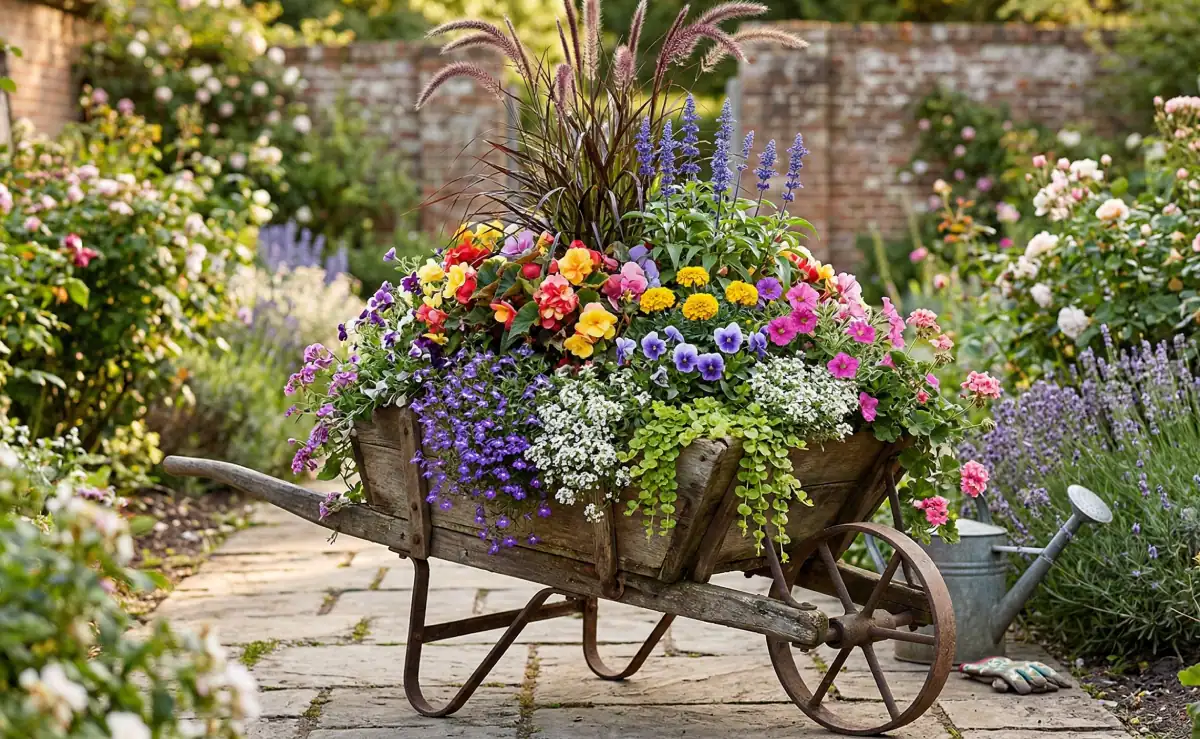
Looking for a creative, rustic way to display your spring and summer blooms? A wheelbarrow for flowers is the perfect weekend gardening project.
Upcycling an antique wooden cart or repurposing a retired metal wheelbarrow adds instant farmhouse charm to any yard or patio. Beyond aesthetics, these mobile planters offer incredible practicality. Thanks to their wheels, you can easily chase the sunlight, protect delicate blooms by moving them under cover during a harsh storm, or rearrange your outdoor space on a whim.
Here is exactly how to set up, plant, and maintain a gorgeous, thriving wheelbarrow planter from start to finish.
Choosing the Right Wheelbarrow for Flowers
Before you start buying soil and seeds, you need to decide on the foundation of your container garden. The type of wheelbarrow you choose will dictate how you prep it and what kind of aesthetic your garden will have.
Wooden Wheelbarrows
Wooden wheelbarrows are the quintessential choice for a rustic, cottage-core aesthetic. They look incredible spilling over with vibrant blooms. However, wood is highly susceptible to moisture and rot. If you are buying a decorative wooden wheelbarrow (or building one), ensure it is treated with a non-toxic, weather-resistant sealant. You may also want to line the inside with heavy-duty landscaping plastic to create a barrier between the wet soil and the wood.
Metal Wheelbarrows
Old galvanized steel or painted metal wheelbarrows offer a charming, vintage industrial look. They are incredibly durable and can hold a massive amount of soil. The main concern with metal is rust. While a little rust adds character, too much will cause the bottom to fall out. You can spray the interior with a rust-inhibiting clear coat before planting to extend its lifespan.
Step-by-Step: How to Prep Your Wheelbarrow Planter
Turning a working tool into a thriving environment for plants requires a little bit of preparation. The biggest enemy of any container garden is standing water.
Step 1: Create Drainage Holes This is the single most important step. Without proper drainage, your flowers will succumb to root rot. Use a drill with a bit suited for metal or wood (depending on your cart) and drill six to ten holes spaced evenly across the lowest points of the wheelbarrow bed.
Step 2: Add a Drainage Layer To prevent potting soil from washing out of the holes you just drilled, lay down a piece of permeable landscape fabric over the bottom. Alternatively, you can add a one-inch layer of gravel or broken terracotta pot shards to help the water flow freely.
Step 3: Fill with High-Quality Soil Do not use heavy garden soil or dirt dug up from your yard; it will compact and suffocate your plants. Instead, fill your wheelbarrow for flowers with a premium, lightweight potting mix formulated for container gardens. Leave about an inch of space between the top of the soil and the lip of the wheelbarrow to prevent water from running over the sides when you water.
Selecting the Best Flowers for Your Wheelbarrow
Because a wheelbarrow is essentially a large, shallow container, the “Thriller, Filler, Spiller” method works perfectly here to create a lush, professional-looking arrangement.
The Thrillers (Height and Drama)
Place these taller, statement plants in the center or toward the back (the handle side) of the wheelbarrow.
- Purple Fountain Grass
- Salvia
- Snapdragons
- Upright Geraniums
The Fillers (Volume and Color)
These plants will make up the bulk of your wheelbarrow, filling in the spaces around your thrillers with a mound of beautiful colors.
- Begonias
- Petunias
- Marigolds
- Pansies (for cooler spring weather)
- Zinnias
The Spillers (Trailing and Cascading)
To really sell the look of an overflowing wheelbarrow, you need plants that will cascade gracefully over the metal or wooden edges. Plant these right along the perimeter.
- Trailing Lobelia
- Sweet Alyssum
- Creeping Jenny
- Ivy Geraniums
- Calibrachoa (Million Bells)
Maintenance Tips for a Thriving Display
Once your wheelbarrow is planted, keeping it looking vibrant throughout the season requires standard container garden care.
- Watering: Wheelbarrows hold a lot of soil, but they are still above ground, meaning they will dry out faster than your garden beds. During the peak of summer, check the soil daily. If the top two inches feel dry, give it a deep watering until water runs out of the drainage holes.
- Fertilizing: Flowers planted in containers quickly use up the nutrients in their potting soil. Apply a water-soluble bloom-boosting fertilizer every two to three weeks to keep the flowers producing continuously.
- Deadheading: Regularly pinch off dead or fading blooms. This stops the plant from putting energy into creating seeds and redirects that energy into producing more beautiful flowers.
Frequently Asked Questions
Do I absolutely have to drill holes in my antique wheelbarrow? If you cannot bear to drill holes into a valuable antique, do not plant directly into the wheelbarrow bed. Instead, keep your flowers in their individual plastic nursery pots and arrange them inside the wheelbarrow. You can then cover the tops of the pots with Spanish moss or mulch to hide them. You will just need to tip the wheelbarrow to empty standing water after heavy rain.
How deep does the soil need to be? Most annual flowers require a minimum of 6 to 8 inches of soil depth for their roots to establish properly. A standard wheelbarrow provides more than enough depth for a spectacular annual flower display.
Can I leave my wheelbarrow out during the winter? If you live in a region with freezing temperatures, it is best to empty the soil at the end of the fall and store your wheelbarrow in a shed or garage. Freezing and thawing wet soil can warp metal and split wood, significantly shortening the life of your planter.


