

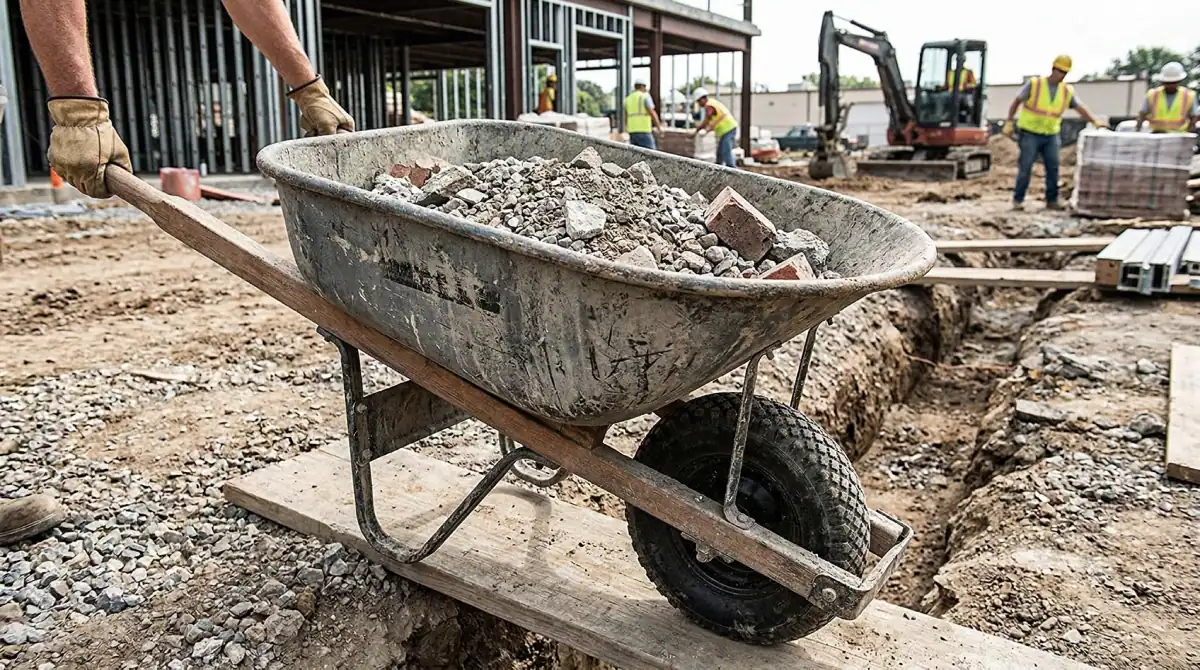
On any busy jobsite, efficiency and durability are everything. Whether you are mixing concrete, hauling bricks, or clearing heavy debris, the tools you rely on need to withstand serious abuse. While power tools often get all the glory, there is one unsung hero of the building world that no crew can work without: the construction wheelbarrow.
Unlike a standard garden cart meant for moving mulch and pulling weeds, a heavy-duty construction wheelbarrow is engineered specifically to handle the grueling demands of a commercial jobsite. In this guide, we will break down exactly what makes a contractor-grade wheelbarrow stand out, the key features you need to look for, and how to choose the right one for your next project.
What Makes a Construction Wheelbarrow Different?
At first glance, all wheelbarrows might look similar. However, a true construction wheelbarrow is built with reinforced materials designed to carry massive weight without buckling.
A standard residential wheelbarrow typically features a thin plastic or stamped metal tray with a small capacity and a basic wheel. If you try to load it with wet concrete or jagged rocks, the tray will crack, the handles will splinter, or the tire will pop.
A construction wheelbarrow, on the other hand, features a thick gauge steel or high-density poly tray, reinforced undercarriages, heavy-duty axles, and handles designed to leverage hundreds of pounds of weight safely. It is built for survival.
Key Features to Look For
When shopping for a construction wheelbarrow, your decision should be based on the specific materials you plan to haul. Here are the most important components to evaluate:
1. Tray Material: Steel vs. Poly
The tray (or tub) is where the heavy lifting happens. You generally have two choices:
- Steel Trays: Steel is the traditional choice for contractors. It is incredibly strong and handles heavy, abrasive materials like gravel, rocks, and bricks beautifully. However, steel can rust if the paint chips and it is exposed to moisture, making it less ideal if you frequently mix wet cement and don’t clean it thoroughly.
- Poly (Polyurethane) Trays: High-density poly trays have become increasingly popular on jobsites. They are lighter than steel, which reduces user fatigue, and they are completely immune to rust. Modern poly is thick enough to resist cracking under extreme cold or heavy impacts, making it excellent for mixing mortar or concrete.
2. Handle Material
The handles dictate how well you can maneuver the load and how much shock is transferred to your arms.
- Hardwood Handles: Ash or hickory wood handles are the industry standard. Wood naturally absorbs the vibrations of rolling over uneven ground, saving your joints from fatigue. They do require some maintenance to prevent splintering over time.
- Steel Handles: Steel handles will never snap under pressure. They are incredibly durable, but they do not absorb shock well and can become very hot or very cold depending on the weather.
3. Tire Type
A flat tire on a jobsite brings work to a grinding halt. You have two main tire options for a construction wheelbarrow:
- Pneumatic (Air-Filled) Tires: These provide the smoothest ride. Because they are filled with air, they absorb the bumps of rocky terrain, making the load feel lighter and easier to push. The downside? They can be punctured by nails or sharp debris.
- Flat-Free (Solid) Tires: Made of solid polyurethane foam, these tires can never go flat. While they ride a bit rougher and don’t absorb shock as well as pneumatic tires, they are highly recommended for construction sites where sharp hazards are scattered everywhere.
4. Load Capacity
Capacity is measured in cubic feet. For general landscaping, 4 cubic feet is sufficient. However, a standard construction wheelbarrow should have a capacity of at least 6 cubic feet. This allows you to move substantial amounts of material—like a full load of wet concrete or a massive pile of broken drywall—in fewer trips.
Single Wheel vs. Dual Wheel: Which is Better?
Another major decision is whether to buy a traditional single-wheel model or a dual-wheel (two-wheel) model.
- Single Wheel: The classic design offers maximum maneuverability. You can easily pivot a single-wheel wheelbarrow, turn tight corners, and, most importantly, roll it along narrow wooden planks to cross trenches or pour concrete into forms. It requires more core strength from the user to balance heavy loads.
- Dual Wheel: A wheelbarrow with two wheels in the front provides exceptional stability. You rarely have to worry about the load tipping over sideways, making it perfect for hauling exceptionally heavy, shifting loads over flat ground. However, it cannot be pushed across narrow planks and is harder to pivot in tight spaces.
Common Uses on the Jobsite
A high-quality construction wheelbarrow is a versatile workhorse. Some of its most common commercial applications include:
- Mixing and Pouring: Used as a mobile mixing station for small batches of concrete, mortar, or grout.
- Hauling Aggregates: Moving heavy loads of crushed stone, gravel, and sand from the delivery drop-off to the exact work location.
- Transporting Hardscapes: Safely moving heavy bricks, cinder blocks, and paving stones without breaking your back.
- Debris Removal: Quickly clearing out demolition waste, broken drywall, roofing shingles, and scrap wood to keep the jobsite safe and compliant.
Maintenance Tips to Keep Your Wheelbarrow Rolling
Even the toughest construction wheelbarrow requires a little upkeep to extend its lifespan.
- Clean it daily: Never let concrete or mortar dry in the tray. Wash it out with a hose at the end of every shift.
- Grease the axle: Apply a few drops of oil or a squirt of lithium grease to the wheel bearings every few months to ensure a smooth, squeak-free roll.
- Treat wood handles: If you have hardwood handles, lightly sand them once a year and rub them down with boiled linseed oil to prevent drying, cracking, and splintering.
- Check tire pressure: If using pneumatic tires, check the air pressure regularly. Under-inflated tires make pushing heavy loads significantly harder.
Investing in a proper construction wheelbarrow pays for itself in saved time, reduced physical strain, and longevity. By evaluating the tray material, handles, and tire types, you can select the perfect tool to keep your crew moving efficiently from groundbreaking to the final cleanup.


