

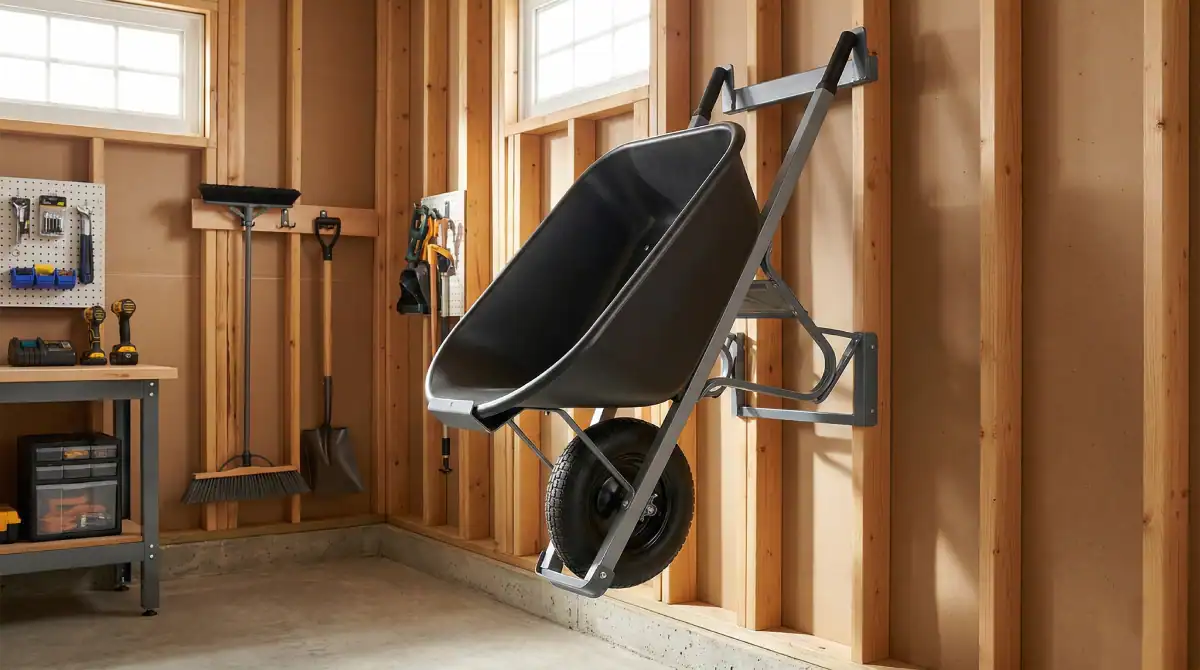
If you spend any amount of time working in your yard or garden, a wheelbarrow is an absolute necessity. But when the landscaping work is done, this bulky, awkwardly shaped tool becomes a massive headache. Left on the floor, it eats up valuable square footage, creates a tripping hazard, and generally makes your shed or garage look like a cluttered mess.
The secret to reclaiming your floor space is surprisingly simple: a wheelbarrow wall mount.
By utilizing vertical storage, you can get your wheelbarrow up and out of the way, protecting your equipment while instantly making your workspace feel larger. Whether you are looking to purchase a heavy-duty bracket or want to know the safest way to secure your gear, this post breaks down everything you need to know about wheelbarrow wall mounts.
Why You Need a Wheelbarrow Wall Mount
Storing a wheelbarrow flat on the ground takes up roughly 10 to 12 square feet of floor space. When you multiply that by the cost per square foot of your home or garage, you realize exactly how expensive that messy floor footprint really is.
Implementing a wall mount system offers several immediate benefits:
- Maximizes Floor Space: Moving bulky items to the wall opens up room for vehicles, lawnmowers, or a dedicated workbench.
- Improves Safety: Tripping over a heavy steel wheelbarrow tray or its long wooden handles can cause serious injury. Getting it off the ground eliminates this common hazard.
- Protects Your Equipment: Storing a wheelbarrow upright prevents water, dirt, and debris from pooling in the tray, which ultimately prevents rust on steel models and degradation on poly trays.
- Keeps Tires Intact: Storing the wheelbarrow off the ground takes the weight off the pneumatic tire, preventing flat spots or pressure leaks during the long winter months.
Top Types of Wheelbarrow Wall Mounts
When shopping for the right storage solution, you will generally find a few popular commercial products, alongside some highly effective DIY options. Here is a breakdown of the best ways to hang your wheelbarrow.
1. Spring-Loaded Latch Mounts
These are the most popular and commercially available options on the market. The system usually consists of two parts: a bottom bracket where the front lip of the wheelbarrow rests, and a top spring-loaded latch that snaps over the back lip of the tray.
- Best for: Ease of use. You simply lift the wheelbarrow, drop the front lip into the bottom bracket, and push the tray flat against the wall until the top latch clicks into place.
2. Heavy-Duty Dual Hooks
Standard heavy-duty utility hooks can also serve as an excellent wheelbarrow wall mount. By installing two padded, heavy-duty U-hooks horizontally across a wall stud, you can hang the wheelbarrow by its handles (facing downward) or by the front guard bracket.
- Best for: Versatility. These hooks are incredibly strong and can easily be repurposed for ladders or power tools if you decide to store your wheelbarrow elsewhere.
3. The DIY Wood Cleat Method
If you have scrap wood lying around, you can build your own custom mount. This usually involves screwing a sturdy wooden cleat to the wall studs to catch the front lip of the wheelbarrow, and using a simple wooden swivel latch or a hook-and-eye mechanism at the top to lock it in.
- Best for: Those on a tight budget who want a rugged, customized fit for a non-standard wheelbarrow.
What to Look for When Buying a Bracket
If you decide to go the commercial route and purchase a ready-made wheelbarrow wall mount, keep these crucial features in mind:
- Weight Capacity: Wheelbarrows are heavy, especially traditional steel models with hardwood handles. Ensure the mount you purchase is rated for at least 50 to 80 pounds.
- Material and Coating: Look for brackets made of heavy-gauge steel. Powder-coated or galvanized finishes are essential, especially if you are mounting it in an unheated shed where moisture could cause a cheaper metal bracket to rust and fail.
- Hardware Quality: Many store-bought mounts come with cheap mounting screws. It is highly recommended to toss out the included hardware and use high-quality, heavy-duty wood screws or lag bolts to ensure the mount stays firmly anchored to the wall stud.
How to Install a Wheelbarrow Wall Mount Safely
Even the strongest wall mount in the world will fail if it is not installed correctly. Because of the weight and awkward shape of a wheelbarrow, proper installation into a solid structure is non-negotiable.
Here is a quick step-by-step guide to installing a standard lip-and-latch style mount:
Step 1: Locate the Wall Stud Never install a wheelbarrow wall mount directly into drywall. Use a stud finder to locate the center of a wooden stud in your garage or shed wall. Mark the center line with a pencil.
Step 2: Determine the Height Lift your wheelbarrow so it is standing vertically on its front guard/wheel. Note where the bottom front lip of the tray hits the wall. You want your bottom bracket installed just below this point so you don’t have to lift the heavy wheelbarrow entirely off the floor to mount it.
Step 3: Secure the Bottom Bracket Pre-drill your holes to prevent the stud from splitting. Secure the bottom bracket to the wall stud using heavy-duty wood screws or lag bolts.
Step 4: Mark and Install the Top Latch Lift the wheelbarrow into the bottom bracket and push the back handles toward the wall so it sits flush. Have a helper mark exactly where the top lip of the wheelbarrow tray hits the stud. Remove the wheelbarrow, align your spring-loaded top latch with the mark, pre-drill, and secure it to the stud.
Step 5: Test the Mechanism Lift the wheelbarrow into place. The bottom lip should sit securely in the bracket, and the top latch should snap firmly over the top lip without requiring excessive force.
Frequently Asked Questions
Can any wheelbarrow be mounted to the wall? Most standard single-wheel wheelbarrows with a distinct front and back lip can be mounted using a traditional spring-loaded wall mount. However, dual-wheel models or motorized wheelbarrows are often too heavy and awkwardly shaped for standard wall brackets and should be stored on the ground.
How high off the ground should I mount my wheelbarrow? To save your back, you should mount it as low as possible. Position the bottom bracket so the front nose or wheel of the wheelbarrow is only hovering an inch or two above the ground when secured. This means you only have to tilt the wheelbarrow up rather than physically lifting the entire weight of the tool.
Will hanging a wheelbarrow damage the plastic tray? If you have a poly (plastic) wheelbarrow, hanging it by the lip using a commercial wall mount will not damage it, provided the mount is installed correctly and the tray is empty. Always make sure to clean out dirt, concrete, or gravel before hanging, as the extra weight pulling on the plastic lip could cause it to warp or crack over time.


