

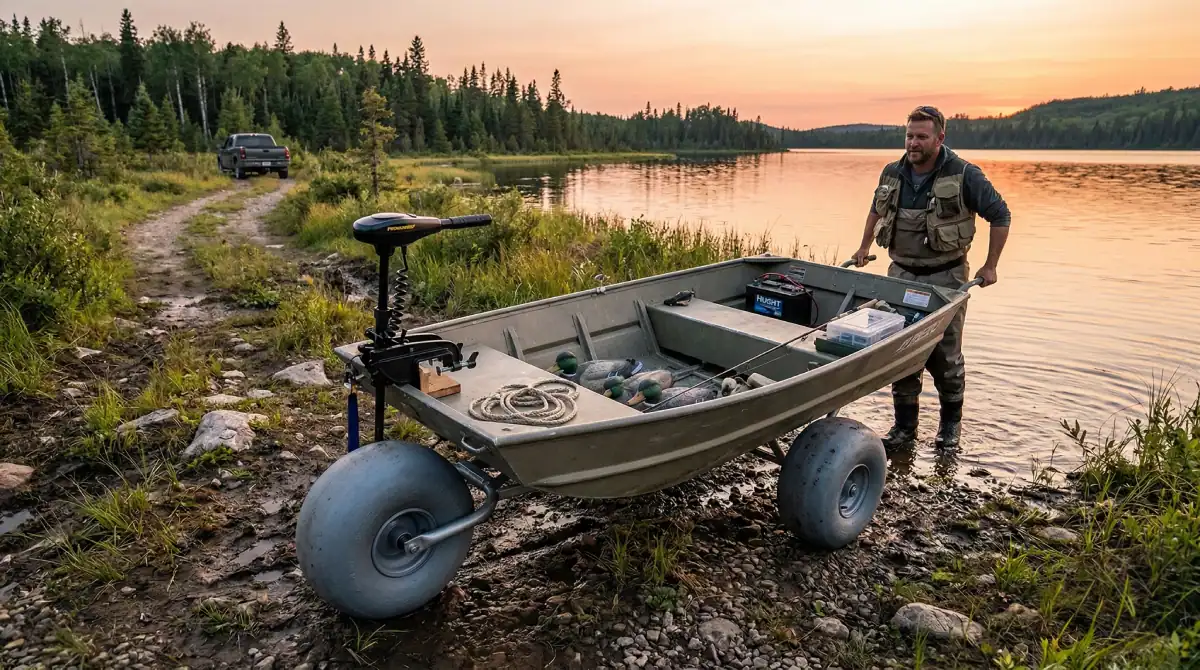
If you have ever struggled to drag a heavy dinghy across rocky shorelines, through thick mud, or down a long, winding trail to reach the water, you are not alone. Getting a small watercraft from your truck to the water’s edge is often the most exhausting part of a solo fishing or hunting trip. Enter the wheelbarrow boat—a wildly practical, historically clever, and increasingly popular solution for outdoor enthusiasts.
Whether you are a seasoned duck hunter, a solo angler looking to access hidden ponds, or a DIY enthusiast looking for a fun weekend project, understanding the mechanics and benefits of a wheelbarrow boat can completely change how you approach the water.
What Exactly is a Wheelbarrow Boat?
A wheelbarrow boat is exactly what it sounds like: a hybrid between a traditional small boat (usually a punt, skiff, or dinghy) and a wheelbarrow.
The design is brilliantly simple. A single, sturdy wheel is integrated into the bow (the front) of the hull. To move the boat on land, the user simply walks to the stern (the back), lifts it by a set of handles, and pushes the entire vessel forward—just like a wheelbarrow. Once you reach the water, the boat is pushed in, and the wheel either sits above the waterline, retracts, or simply rests harmlessly in the water while you paddle or motor away.
While some internet searches might pull up novelty videos of people literally floating in plastic garden wheelbarrows, a true wheelbarrow boat is a purpose-built watercraft designed for ultimate overland portability.
The History and Origins of the Design
The concept of integrating a wheel into a boat hull is not a new internet fad; it has deep roots in traditional hunting and fishing. Historically, waterfowl hunters and trappers needed a way to access remote marshlands where there were no boat ramps. Dragging a wooden punt over dry land was labor-intensive and damaging to the hull.
By adding a wide, drum-like wheel to the front of a flat-bottomed boat, hunters could load their decoys, shotguns, and gear into the hull, using the boat itself as a cargo carrier on land. Once they hit the marsh, the boat transitioned seamlessly from a land-cart to a stable shooting platform. This “punt and wheel” design has been adapted over decades, heavily utilized in the muddy estuaries of Europe and the backwaters of North America.
Key Benefits of Using a Wheelbarrow Boat
Why choose a wheelbarrow boat over a kayak, canoe, or a standard jon boat? The unique design offers several distinct advantages:
- Ultimate Solo Portability: You do not need a second person to help you carry it. The wheel bears the brunt of the boat’s weight and the weight of your gear.
- Built-In Gear Transport: Unlike a canoe or kayak where you might have to make two trips—one for the boat and one for your gear—a wheelbarrow boat allows you to load your heavy battery, trolling motor, tackle boxes, and coolers right into the hull before you start walking.
- No Boat Ramp Required: This is the ultimate “off-grid” vessel. You can park your truck on the side of a road and roll your boat through woods, across fields, and over gravel to reach untouched fishing holes.
- Hull Protection: Dragging a fiberglass, wood, or even aluminum boat across the ground eventually wears down the hull. The wheel protects the bottom of your boat from abrasive rocks and concrete.
Popular Uses for a Wheelbarrow Boat
Because of its unique hybrid nature, this type of watercraft is favored by specific groups of outdoor adventurers:
Duck and Waterfowl Hunting
Duck hunters are the primary demographic for the wheelbarrow boat. Getting into flooded timber or shallow marshlands requires navigating terrain that is constantly shifting between dry land and shallow water. Hunters can roll their blind and decoys right into the thickest cover without breaking a sweat.
Remote Pond Fishing
If you know about a secret bass pond that sits a mile off the main trail, a standard jon boat is out of the question. A wheelbarrow boat allows a single angler to push a stable, flat-bottomed fishing platform through the woods with ease.
Trapping and Foraging
For those who navigate wetlands to check traps or forage, the ability to transition from land to water without unloading cargo is a massive time-saver.
How to Build Your Own DIY Wheelbarrow Boat
Because commercial availability of these specialized boats can be limited depending on your region, many outdoorsmen choose the DIY route. Building a DIY wheelbarrow boat is a highly rewarding project that usually involves modifying an existing small boat.
Here is a general overview of how it is done:
- Choose the Right Hull: A lightweight, flat-bottomed boat, like a small aluminum jon boat or a wooden punt, works best. You want a boat with a blunt or squared-off bow to easily mount the wheel assembly.
- Select the Wheel: A wide, pneumatic tire (like a lawn tractor tire or a specialized beach balloon tire) is ideal. The wider the tire, the less likely it is to sink into mud or soft sand.
- Fabricate the Bracket: Using marine-grade aluminum or galvanized steel, create a fork or bracket system that extends just past the bow.
- Mounting: Bolt the bracket securely to the bow, ensuring the mounting points are sealed with marine sealant to prevent leaks. The wheel should sit high enough that it doesn’t create massive drag in the water, but low enough to engage the ground when the stern is lifted.
- Add Stern Handles: Attach two sturdy handles to the rear transom to give yourself the leverage needed to lift and push the boat.
Frequently Asked Questions (FAQs)
Are wheelbarrow boats stable in the water? Yes, most are built on flat-bottom punt or jon boat designs, which offer excellent primary stability. The addition of the wheel at the front adds negligible weight and does not negatively impact the boat’s balance on calm waters.
Can I put a motor on a wheelbarrow boat? Absolutely. Most of these boats have a standard rear transom that can easily accommodate a small electric trolling motor or a low-horsepower outboard gas motor. Just remember that you will have to push the weight of the motor when on land!
Does the front wheel cause drag when boating? If designed correctly, the wheel is positioned so that when the boat is sitting flat in the water, the wheel is either completely out of the water or only barely touching the surface. Some advanced designs even feature a pin system that allows you to remove or flip the wheel up once you are afloat.
Where can I buy a wheelbarrow boat? While custom boat builders and specialty hunting outfitters occasionally produce them, they are considered a niche item. Many users either commission a local aluminum welder to modify an existing small boat or follow DIY guides and videos available online.
Final Thoughts
The wheelbarrow boat is a testament to outdoor ingenuity. By combining the load-bearing efficiency of a simple wheelbarrow with the buoyancy of a flat-bottomed boat, it unlocks access to waters that most people simply cannot reach. Whether you are building one yourself or modifying a trusty old skiff, adding a wheel to your boat might just be the best upgrade you make for your solo outdoor adventures.


