

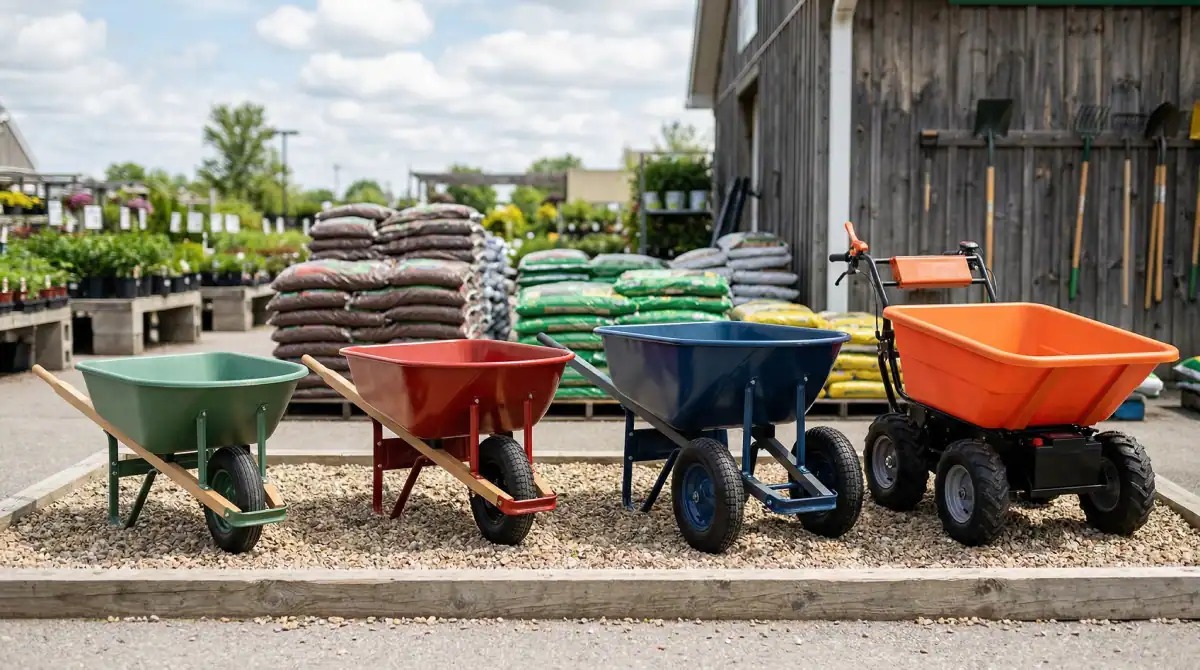
Whether you are a weekend gardening enthusiast, a DIY homeowner, or a professional contractor, a wheelbarrow is an indispensable tool. It saves your back and speeds up almost any outdoor project. But when it comes time to buy or replace one, you might find yourself wondering: what is the actual cost of wheel barrow models on the market today?
Because wheelbarrows range from simple plastic tubs for light yard work to heavy-duty motorized carts for construction sites, the prices vary wildly. In this guide, we will break down exactly how much you should expect to spend, the factors that drive those prices up or down, and how to choose the right one for your budget.
What is the Average Cost of Wheel Barrow Models?
If you are looking for a quick answer, the general cost of wheel barrow options ranges from $40 to over $250 for standard manual models. If you step up to motorized or battery-powered options, the price can easily jump between $500 and $2,500.
Here is a quick breakdown of average price tiers based on standard market rates:
- Budget/Light-Duty: $40 – $70
- Mid-Range/Standard: $70 – $130
- Heavy-Duty/Contractor: $130 – $300+
- Motorized/Electric: $500 – $2,500+
To understand why there is such a massive gap between a $40 model and a $300 model, you have to look at how the tool is built.
Key Factors That Influence the Price
Not all wheelbarrows are created equal. When evaluating the cost of wheel barrow designs, you are paying for the materials, the capacity, and the specific features engineered into the cart.
1. Tray Material: Plastic vs. Steel
The tray (the tub where you put your materials) is the biggest factor in pricing.
- Plastic/Polyurethane: These are the most affordable. They are lightweight, immune to rust, and perfect for hauling mulch, weeds, and soil. However, they can crack under heavy weight or in freezing temperatures.
- Steel: Steel trays cost significantly more. They are designed for hauling rocks, gravel, concrete, and heavy tools. While they are incredibly durable, they are heavier to push and can rust if the paint chips and they are left in the rain.
2. Tire Types
The wheels on your barrow dictate how smoothly it rolls and how much maintenance it requires.
- Pneumatic Tires: These are air-filled tires, similar to bicycle tires. They offer the smoothest ride and are great for uneven terrain. They are usually standard on mid-range models. The downside is that they can go flat.
- Flat-Free (Solid) Tires: Made of solid polyurethane foam, these tires will never go flat or need air. Because of this zero-maintenance convenience, wheelbarrows with flat-free tires generally cost $15 to $30 more than those with pneumatic tires.
3. Number of Wheels
A traditional single-wheel barrow is highly maneuverable and cheaper to manufacture. Dual-wheel (two-wheel) wheelbarrows are becoming increasingly popular because they offer far better balance and prevent tipping when handling heavy, awkward loads. Because they require an extra tire and a wider axle, dual-wheel models are generally more expensive.
4. Handle Material
Standard wooden handles (usually ash or hickory) are traditional and cost-effective, but they can weather and splinter over time. Steel handles or ergonomic composite handles with specialized grips usually bump up the price but offer better longevity and comfort.
Types of Wheelbarrows and Their Price Ranges
To help you make the right transactional decision, let’s look at the specific types of wheelbarrows and what you can expect to pay for them.
Light-Duty Poly Wheelbarrows ($40 – $80)
These are ideal for basic residential gardening. They typically hold about 4 to 5 cubic feet of material. If you are moving leaves, potting soil, and small branches, there is no need to spend more than this.
Standard Steel Wheelbarrows ($80 – $140)
This is the sweet spot for most homeowners. A standard 6-cubic-foot steel wheelbarrow can handle moderate landscaping projects, including moving gravel and mixing small batches of concrete. Brands like Jackson, True Temper, and Ames dominate this price range.
Heavy-Duty Contractor Wheelbarrows ($150 – $300)
Built for job sites, these feature thick-gauge steel trays, heavy-duty undercarriages, front braces, and flat-free tires. They are designed to take a beating day in and day out. If you are doing serious hardscaping or construction, investing in this tier is a necessity.
Motorized and Electric Wheelbarrows ($500+)
If you are moving incredibly heavy loads up inclines, motorized wheelbarrows do the pushing for you. Powered by gas engines or heavy-duty lithium-ion batteries, these are specialty tools usually reserved for professional landscapers, farmers, and construction crews.
Where to Buy a Wheelbarrow
Because of their size, shipping a fully assembled wheelbarrow can be difficult and expensive. Therefore, most consumers purchase them from local brick-and-mortar stores.
- Big Box Hardware Stores: Home Depot and Lowe’s offer the widest variety of assembled and unassembled wheelbarrows. You can easily compare the budget and mid-range options side-by-side.
- Farm and Fleet Stores: Tractor Supply Co. and similar rural retailers are excellent places to find heavy-duty and dual-wheel models designed for farm work.
- Online Retailers: You can buy wheelbarrows on Amazon, but be aware that they will usually arrive unassembled in a box, meaning you will need a few wrenches and about 30 minutes to put it together.
Is a Cheap Wheelbarrow Worth It?
When researching the cost of wheel barrow models, it is tempting to just grab the cheapest $40 plastic tub you can find. However, you should consider the “buy it nice or buy it twice” rule.
If you overload a cheap plastic wheelbarrow with bricks or gravel, the tray will crack, or the thin wooden handles will snap under the leverage. Suddenly, your $40 investment is headed to the landfill, and you have to go buy another one.
If you only plan to garden lightly in the spring, the budget option is perfectly fine. But if you own a home and anticipate years of spreading mulch, moving rocks, and doing yard renovations, spending $100 to $150 on a solid steel wheelbarrow with flat-free tires is a much smarter, more cost-effective decision in the long run.
Final Thoughts
The true cost of wheel barrow shopping comes down to matching the tool to your specific needs. Assess your terrain, what you plan to haul, and how often you will use it. By understanding the price brackets and the materials that dictate them, you can confidently choose a wheelbarrow that fits both your backyard projects and your wallet.


