

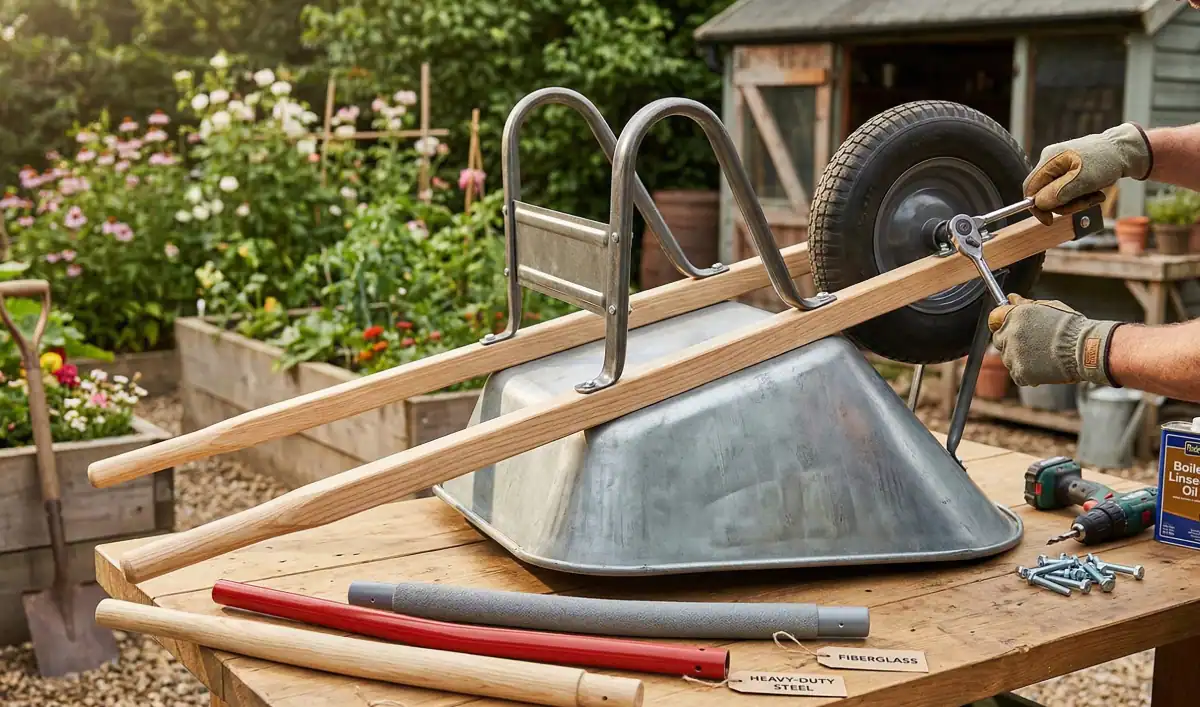
If you spend any significant amount of time gardening, landscaping, or tackling DIY home improvement projects, your wheelbarrow is likely one of your most trusted companions. But even the sturdiest steel tub or heavy-duty tire won’t do you much good if the handles splinter, crack, or completely snap in half.
Instead of throwing out a perfectly good tub and wheel assembly, investing in replacement handles for wheelbarrow frames is a cost-effective and environmentally friendly solution. Whether you are looking to restore an old favorite or upgrade to something more ergonomic, this guide covers everything you need to know about choosing, buying, and installing the perfect replacement handles.
Why Upgrading Your Wheelbarrow Handles Matters
When a handle breaks, replacing it is an obvious necessity. However, many homeowners and professionals choose to swap out their handles before they actually snap. Upgrading your handles can provide several key benefits:
- Improved Ergonomics: Older wheelbarrows often feature straight, rigid handles that strain your wrists and lower back. Upgrading to slightly curved handles or adding ergonomic grips can drastically reduce physical fatigue.
- Increased Weight Capacity: If you frequently haul wet concrete, heavy rocks, or dense soil, flimsy handles will bow and eventually break. Upgrading to a denser wood or heavy-duty fiberglass improves your load capacity.
- Extended Lifespan: By replacing worn, rotting wood before it completely fails, you prevent potential accidents and keep your trusty wheelbarrow in peak working condition for years to come.
Types of Handles for Wheelbarrow: A Material Guide
When shopping for replacement handles, you will quickly find that you have a few different materials to choose from. Each has its own distinct advantages and ideal use cases.
1. Traditional Wooden Handles
Wood remains the most popular choice for wheelbarrow handles, and for good reason. High-quality wood naturally absorbs the shock and vibration of rolling over uneven terrain, saving your arms and shoulders from taking the brunt of the impact.
- Hardwoods are Best: Look for handles made from ash or hickory. Ash is incredibly strong yet flexible, making it the industry standard. Hickory is denser and highly impact-resistant.
- Pros: Excellent shock absorption, comfortable grip, traditional aesthetic, and relatively inexpensive.
- Cons: Susceptible to weather damage, rot, and splintering if left outdoors. They require occasional maintenance, such as sanding and applying boiled linseed oil.
2. Steel and Metal Handles
For heavy-duty construction sites, metal handles are often the go-to choice. They are incredibly rigid and designed to withstand brutal daily use.
- Pros: Virtually indestructible under normal working conditions, immune to rotting, and offers maximum structural support for heavy loads.
- Cons: Heavy, which adds to the overall weight you have to push. Metal does not absorb shock well, meaning every bump on the ground transfers directly to your hands. They can also rust if the protective coating is scratched.
3. Fiberglass Handles
Fiberglass is the modern alternative to wood, offering a middle ground between the natural feel of hardwood and the extreme durability of steel.
- Pros: Weather-resistant, lightweight, and incredibly strong. They won’t rot, warp, or rust, making them ideal if you store your wheelbarrow outside.
- Cons: While tougher than wood, fiberglass can eventually splinter or crack under severe stress or prolonged UV exposure. They also tend to be more expensive than basic wooden replacements.
What to Look for When Buying Replacement Handles
Before you click “add to cart” or head to the local hardware store, make sure you have the right specifications. Wheelbarrows are not universal, and buying the wrong size will lead to a frustrating installation process.
- Length: Standard wheelbarrow handles are typically 60 inches long. However, if you are exceptionally tall, you might want to look for 64-inch or 68-inch handles to prevent having to stoop over while walking.
- Pre-Drilled vs. Blank: Some replacement handles come pre-drilled to fit specific popular brands (like Jackson or True Temper). If you have a unique or unbranded wheelbarrow, it is usually safer to buy “blank” handles and drill the holes yourself to ensure a perfect match.
- Handle Wedges: Don’t forget the wedges! These are the angled pieces of wood or plastic that sit between the handles and the wheelbarrow tub to keep the tub level while you push. If your old ones are rotting, buy a replacement kit that includes new wedges.
How to Replace Handles for Wheelbarrow in 4 Easy Steps
Replacing your handles is a highly rewarding, straightforward DIY project that usually takes less than an hour.
Step 1: Remove the Old Handles
Turn your wheelbarrow upside down so it rests on the tub edges. Use a socket wrench to remove the nuts and bolts securing the handles to the tub, the wheel assembly, and the cross braces. Pro Tip: Wheelbarrow bolts are notoriously rusty. Spray them generously with penetrating oil (like WD-40) and let them sit for 15 minutes before attempting to loosen them.
Step 2: Measure and Mark (If using blank handles)
If your new handles are not pre-drilled, line them up alongside your old, broken handles. Use a pencil to carefully mark the exact location of every bolt hole. Accuracy is crucial here, especially for the wheel axle brackets, to ensure your wheelbarrow rolls straight.
Step 3: Drill the Holes
Using a wood drill bit that matches the diameter of your bolts (usually 5/16″ or 3/8″), drill straight down through the handles at your marked locations. A drill press works best for perfectly straight holes, but a steady hand with a standard power drill will work fine.
Step 4: Reassemble and Tighten
Slide the new handles into place, making sure to position the leveling wedges correctly between the handles and the tub. Reattach the front braces, the wheel assembly, and the tub bolts. Hand-tighten all the nuts first to ensure everything aligns correctly, then go back over them with your socket wrench to secure them tightly.
Final Thoughts on Maintenance
Once you have successfully installed your new handles for wheelbarrow frames, a little preventative maintenance will ensure they last. If you opted for wood, give them a light sanding and a coat of protective oil or outdoor polyurethane once a year. Consider adding rubber or foam grip covers to the ends; not only do these protect the tips of the handles from moisture and splintering, but they also provide a much more comfortable, blister-free grip for your hands.


